PVE Elevator Installation for Jeddah Homes
A practical guide to pneumatic vacuum (PVE) elevators for compact Jeddah villas, covering how they work, the space and power they need, the installation steps, and how to keep them safe and maintained in coastal heat and humidity.
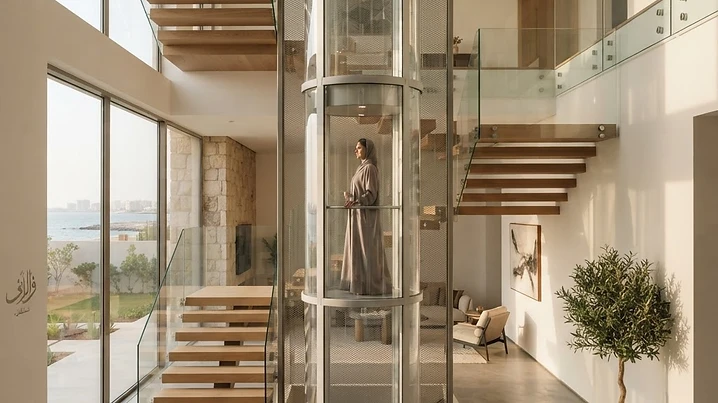
A pneumatic vacuum elevator, or PVE, rides between floors inside a clear sealed tube using nothing more than controlled air pressure, which means PVE elevator installation skips the pit, the concrete shaft and the separate machine room that traditional lifts demand. For a Jeddah villa with limited floor space, that single difference decides whether a home elevator is even possible. This guide walks through what a PVE is, why it fits compact Jeddah homes, what the space and power requirements look like, how the installation runs, and how to keep it safe in local conditions.
Key takeaways
Before diving into the detail, here are the five points that matter most when planning a PVE elevator installation in a Jeddah home:
- A pneumatic vacuum (PVE) elevator moves between floors using air pressure inside a sealed tube, so it needs no pit, no hoistway and no separate machine room.
- PVE lifts suit compact Jeddah villas because the self-supporting tube drops into existing floor cut-outs instead of requiring a concrete shaft.
- Most residential PVE units run on a standard single-phase supply and reach several floors, making them realistic for two to four storey homes.
- Elevator safety in Saudi Arabia leans on recognized codes such as ASME A17.1, so confirm your installer certifies to a current edition.
- Plan for a short installation window and a regular maintenance schedule to keep the seals and turbines performing in Jeddah heat and humidity.
What Is a Pneumatic Vacuum (PVE) Elevator?
A PVE elevator is a home lift that moves a cabin up and down inside a sealed cylindrical tube by changing the air pressure above the car. Turbines mounted at the top pull air to create a gentle vacuum that lifts the cabin, then meter the air back in to lower it. There are no cables, no hydraulic pistons and no counterweights.
- The whole assembly is self-supporting. The tube is built from stacked panels that carry their own load, so the structure does not lean on your walls for strength. Passengers ride in a transparent car that gives a panoramic view of the home, which is part of the appeal for modern villa interiors.
- Because the mechanism is simple and self-contained, a PVE reads more like a fitted appliance than a construction project. That framing matters when you weigh it against heavier cable or hydraulic options that carry far more moving parts and civil work.
Why PVE Lifts Suit Compact Jeddah Villas
PVE lifts suit compact Jeddah villas because the self-supporting tube drops into a floor opening instead of demanding a dedicated concrete shaft, a pit dug below the lowest floor, or a machine room on the roof. In a tight footprint, reclaiming those three spaces changes the math entirely.
- Many Jeddah homes are built across two to four storeys on plots where every square meter is spoken for. Families often add a lift to help elderly parents or to future-proof the house, but they do not want to sacrifice a room or rebuild a stairwell. A PVE answers that by occupying a slim circular footprint and sitting largely within the vertical space a staircase already wraps around.
- The glass tube also keeps the home feeling open. Natural light passes straight through it, so the lift does not darken a hallway the way a boxed-in shaft would. For villa owners who care about how the interior looks, that visual lightness is a genuine selling point rather than a compromise.
What Space and Power Does PVE Elevator Installation Need?
A residential PVE needs a clear vertical run between floors, a matching cut-out in each slab it passes through, and a standard electrical supply, but it does not need the structural excavation a conventional elevator requires. That shaft-free nature is the headline requirement, and the rest follows from it.
- Footprint and vertical clearance: the tube comes in a small range of diameters sized to carry one, two, or a wheelchair-accessible load. You need enough floor area for the chosen diameter plus a modest working margin, and a clear path straight up through each floor. Head clearance at the top landing matters too, since the turbine unit sits above the cabin highest stop. A site survey confirms these dimensions against your actual floor-to-floor heights before anything is ordered.
- Power and structural support: most home PVE units run on a standard single-phase electrical supply rather than the heavy three-phase feed larger commercial lifts draw. A qualified electrician should confirm the dedicated circuit and breaker before installation day. Because the tube carries its own weight, the main structural question is whether each floor slab can take the load of the opening and the anchoring, which the survey also checks.
- No pit, no machine room: the absence of a pit is what makes retrofits realistic. A traditional lift needs a cavity dug below the lowest served floor, which is rarely feasible in a finished Jeddah villa. A PVE sits on the existing floor and vents through the tube, so there is no digging and no roof-top machine room to house.
PVE Installation Steps and Typical Timeline
PVE elevator installation generally runs faster than a conventional lift because there is no shaft to build and no pit to excavate, so the work concentrates on cutting floor openings and assembling a prefabricated tube. The sequence below reflects how a typical residential job unfolds.
- Site survey and design. An engineer measures floor-to-floor heights, checks slab thickness, confirms the landing positions, and sizes the right model for the number of passengers. This is also when power needs are agreed with your electrician.
- Floor preparation. Crews mark and cut the openings in each slab the tube will pass through, then protect the surrounding finishes. Dust control matters in an occupied home.
- Tube assembly. The self-supporting panels are stacked and sealed to form the cylinder, with the cabin and the turbine head unit fitted in sequence.
- Electrical connection and calibration. The unit is wired to its dedicated circuit, the air-pressure controls are calibrated, and the safe descent feature is set.
- Testing and handover. The installer runs the lift through its full travel repeatedly, demonstrates the emergency lowering behavior, and hands over the operating and maintenance documents.
- Compared with the weeks a civil-works lift can take, a shaft-free PVE job is measured in a much shorter window on site, though the design and ordering stage still needs lead time. FUJI TRIENNIUM LIFT handles that full sequence for Jeddah homeowners, from the first survey to the final handover, which keeps the responsibility for fit and finish in one place.
How Do You Maintain a PVE Elevator Safely in Jeddah?
A PVE elevator stays safe and reliable through regular servicing and adherence to recognized safety codes, and Jeddah heat and coastal humidity make that routine more important rather than optional. The good news is that fewer moving parts mean a shorter maintenance list than cable or hydraulic systems carry.
- Elevator safety across the industry leans on established standards. The ASME A17.1 Safety Code for Elevators and Escalators sets out requirements for the design, construction, installation, operation, inspection, testing, and maintenance of elevators, with a current 2025 edition (ASME, Safety Code for Elevators and Escalators, 2025). Ask any installer which edition their product certifies to, and keep that documentation with your handover pack.
- On the day-to-day side, the defining safety feature of a PVE is its behavior during a power cut. The system is designed to let the cabin descend gently to the nearest landing so passengers can step out, rather than stranding anyone between floors. A good installer will demonstrate this at handover.
- For a vacuum system, the seals and turbines are the parts that most repay attention. In Jeddah climate, dust and humidity can shorten the life of a seal that is ignored, so scheduled checks a few times a year protect both ride quality and the pressure system. Putting that on a fixed calendar through a maintenance contract removes the guesswork.
- If a PVE fits your villa layout and your plans for the next decade, the most useful next step is to book a site survey. A survey turns the general guidance here into exact dimensions, a confirmed power plan, and a clear timeline for your specific home, so you can commit with real numbers rather than estimates.
Frequently asked questions
Common questions from Jeddah homeowners about pneumatic vacuum elevators:
- Does a PVE elevator need a pit or a separate machine room? No. A pneumatic vacuum elevator uses a self-supporting tube and an air pressure system, so it needs no pit, no hoistway and no separate machine room. That is why it fits homes where cutting a concrete shaft is impractical.
- How many floors can a home PVE elevator serve in a Jeddah villa? Residential PVE models typically serve several stops across a range that suits most two to four storey villas. Confirm the exact rise and stop count with your supplier against your floor-to-floor heights.
- What power supply does a residential PVE elevator require? Most home PVE units run on a standard single-phase electrical supply rather than heavy three-phase power. A qualified electrician should confirm the circuit and breaker sizing before installation day.
- Is a PVE elevator safe during a power cut? Yes. PVE systems are designed to lower the cabin gently to the nearest landing if power is lost, letting passengers step out safely. Ask your installer to demonstrate this feature during handover.
- How often does a pneumatic vacuum elevator need maintenance? Plan on scheduled servicing a few times a year, with Jeddah heat and coastal humidity making seal and turbine checks especially important. A maintenance contract keeps inspections on a predictable calendar.
Conclusion
A pneumatic vacuum elevator brings a shaft-free, pit-free, machine-room-free answer to the question of adding a lift to a compact Jeddah villa, running on air pressure and a single-phase supply while leaning on the ASME A17.1 safety code. Match the tube diameter to your floors, confirm the slab and power with a survey, plan a short on-site installation, and put seal and turbine checks on a fixed maintenance calendar. FUJI TRIENNIUM LIFT runs that full path for Jeddah homeowners, from the first site survey to the final handover and ongoing service.

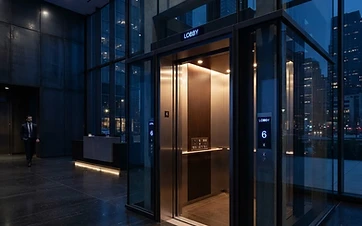
دليل وأهمية مصاعد فوجي تريينيوم FUJI TRIENNIUM LIFT
تعرّف على خبرة فوجي تريينيوم الممتدة منذ 2010، التزامها بكود EN81 وشهادة سابر، ونظام "الفل باكج" الكامل، وخدمات الصيانة على مدار الساعة في المملكة.

Elevator Safety Standards in Saudi Arabia: EN 81-20/50, SABER & SASO Compliance
How EN 81-20/50 design rules, the SABER conformity program, and SASO standards work together to keep elevators safe, certified, and legal to operate in Saudi Arabia.


Elevator Selection Guide: Matching Lift Type to Building Height and Usage
How to match hydraulic, MRL traction, and geared/gearless systems to building height, size capacity around peak five-minute demand, specify ADA accessibility early, and weigh lifetime service cost, not just purchase price.

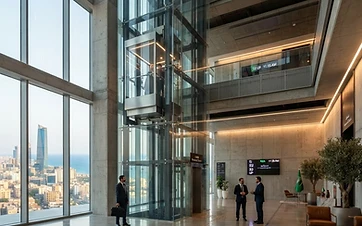
Commercial Elevators in Jeddah: Types, Drive Systems, and Local Factors
How to match the four commercial elevator types to building use, choose between traction and hydraulic drives for Jeddah high-rises and low-rises, and account for the coastal climate and 220V/60Hz power supply in every specification.


Home Elevator Maintenance: A Jeddah Homeowner's Guide
Why Jeddah humidity shortens home elevator service intervals, the simple checks owners can do between visits, the warning signs that demand urgent attention, and how to choose a maintenance provider for your villa.


Elevator Supplier in Jeddah: How to Pick the Right Partner
Pick an elevator supplier in Jeddah by checking three things first: proven local installations, Saudi Building Code compliance, and spare parts stocked inside the Kingdom. Price matters, but a cheaper quote that leaves you waiting weeks for an imported part or an engineer costs far more once your building is live.

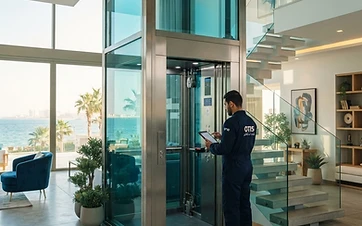
Home Elevator Maintenance Cost in Jeddah 2026
Why the home elevator maintenance cost in Jeddah splits into a predictable contract and a variable repair reserve, how contract and pay-per-visit pricing compare, and the parts, callouts, and modernization costs to budget for across a lift life.

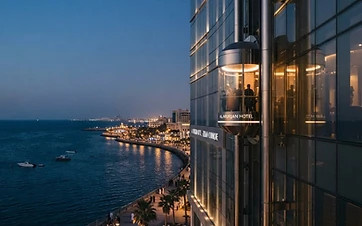
Panoramic Elevators for Jeddah Corniche Hotels
How panoramic elevators turn a hotel ride into a Red Sea viewing experience, the laminated glass and structural allowance that EN 81-20 demands on a coastal tower, and why exposed lifts need tighter cleaning and corrosion care than inland units.

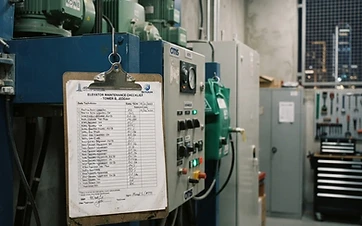
Free Elevator Maintenance Checklist PDF for Jeddah Managers
How a checklist PDF groups tasks by frequency, the four line-item blocks every Jeddah tower needs, why each row carries a named owner and a signature, and why a printed sheet beats an app in a machine room with weak signal.


How to Choose an Elevator: A Practical Selection Guide
Picking the right elevator comes down to five decisions: the drive type, the capacity, the cabin and finishes, the safety and accessibility features, and the long-term service plan. Get those right in order and the rest of the specification falls into place.