Free Elevator Maintenance Checklist PDF for Jeddah Managers
A printable elevator maintenance checklist structured for Jeddah property managers, grouped by daily, monthly, quarterly and annual tasks across cabin, doors, controller and safety systems, with a practical guide to assigning and tracking completion.
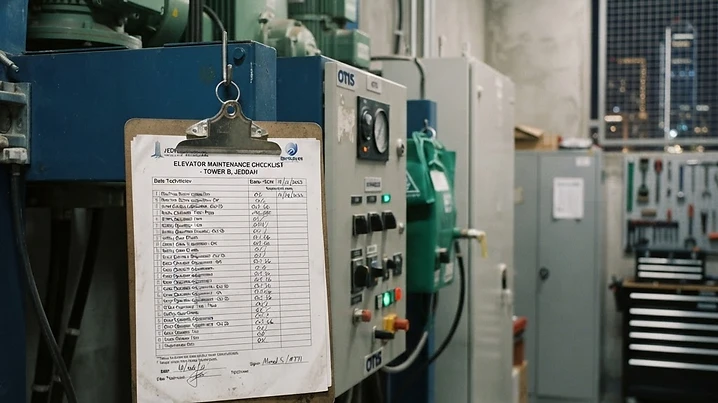
A good elevator maintenance checklist PDF does one job: it tells whoever walks the building exactly what to check, how often, and where to sign off. Below is a checklist you can print and use today, structured for the way Jeddah property managers actually run their towers and mixed-use blocks. Lifts carry more load in Jeddah than many managers realise. Summer heat stresses motors and door operators, fine coastal dust works into guide rails and sensors, and high foot traffic in residential and retail buildings means doors cycle thousands of times a day. A checklist turns that pressure into a routine you can hand to a caretaker, a facilities team, or a visiting technician, instead of relying on memory.
Key takeaways
Before diving into the detail, here are the five points that matter most when building an elevator maintenance checklist for a Jeddah building:
- A usable elevator maintenance checklist groups tasks by frequency: daily visual checks, monthly tests, quarterly service and annual safety testing.
- Cabin, door, controller and safety-system line items are the four blocks every Jeddah checklist needs, with the safety block carrying the highest priority.
- Assign each line item to a named person and record a date and signature, so accountability is clear when a lift fault is reported.
- Keep signed records organised by elevator and by date so they are ready to hand over when a Saudi building inspection takes place.
- A printable PDF works offline in a machine room, which is where phone signal is often weakest in a Jeddah tower.
What a complete maintenance checklist should cover
A checklist is only useful when it is organised by how often each task needs doing. Group your line items into four frequency bands and the rest of the document falls into place.
- Daily visual checks. Quick walk-by items a caretaker can do: lighting works, no unusual noise, the car stops level with the floor, the emergency phone or intercom is answered.
- Monthly tests. Safety features that must actually be triggered: door reversal when something blocks the opening, the alarm button, emergency lighting, and the firefighters recall switch where fitted.
- Quarterly service. Tasks for a qualified technician: lubrication, checking rope or belt condition, cleaning the pit, inspecting the controller cabinet, and testing door operator adjustment.
- Annual safety testing. The full inspection of car safeties, the governor, buffers and brakes, carried out by a competent technician and documented for the record.
- The exact intervals should follow the Saudi Building Code and the terms of your maintenance contract. The Saudi Building Code sets out elevator requirements through its dedicated chapter on elevators and conveying systems. Treat that as the baseline and let your contractor schedule sit on top of it.
An elevator maintenance checklist PDF structured for Jeddah property managers
The checklist below is written to be printed, clipped to a board, and left in the machine room. A printed sheet matters here for a practical reason: machine rooms and lift pits in tall Jeddah buildings often have weak phone signal, so an app that needs to sync can leave you with no record at all. Paper always works.
- Copy the structure into a single page per elevator. Each row carries a task, a frequency, a column for the person responsible, and a column for the date and signature. Keep it to one lift per sheet so a building with four lifts produces four clean records, not one tangled one.
- Set the header of every sheet with the building name, the elevator identifier, the month, and the contractor on call. If you work with a supplier who services your lifts, such as FUJI TRIENNIUM LIFT, add their emergency contact to the header so a caretaker never has to go looking for a number during a fault.
Cabin, door, controller and safety-system line items
The body of the checklist breaks into four blocks. The safety block carries the highest priority: if any safety item fails, the lift should be taken out of service until a technician clears it.
- Cabin: car is clean, well lit, and all ceiling lights work. Car levels correctly with the landing at every floor, with no step up or down. Floor indicator and direction arrows display correctly. Handrail, mirror and wall panels are secure and undamaged. Ventilation fan runs, which matters in Jeddah summer heat. Emergency phone or intercom connects and is answered.
- Doors: doors open and close smoothly with no grinding or stalling. Door reversal works: block the opening and confirm the doors reopen. Door tracks and sills are clear of dust and debris. Photo-eye or light-curtain sensors detect an obstruction across the full height. Landing doors on every floor close fully and lock.
- Controller: controller cabinet is clean, dry, and free of dust buildup. No burning smell, scorch marks, or loose wiring. Cabinet ventilation or cooling is working, since heat shortens component life. Fault log or error display is checked and any codes recorded. Backup battery for emergency operation holds charge.
- Safety systems: overspeed governor and car safeties tested on the annual schedule by a technician. Brakes hold the car securely under load. Buffers in the pit are intact and correctly positioned. Alarm button sounds and emergency lighting activates on power loss. Firefighters recall and emergency operation function where fitted. Pit is dry, clean, and free of water, which is a common issue after a wash-down or a leak.
How to assign tasks and track completion
A checklist with no owner gets ignored. The fix is to put a name against every band of tasks before the month starts, not after something breaks.
- Caretaker or building supervisor: daily visual checks and simple monthly tests such as the alarm and emergency light.
- Facilities or in-house maintenance staff: monthly door and sensor checks, keeping tracks and pits clear.
- Qualified elevator technician: quarterly service and all annual safety testing.
- Write the responsible person name in the sheet header and have them initial each row as it is done. A blank cell at month end is then an obvious gap, not a mystery. For buildings with several lifts, a short weekly review of the sheets lets a manager catch a lift that is quietly falling behind on service.
- When a task reveals a fault, note it on the sheet and open a separate job record with the date reported, the action taken, and the date closed. That paper trail is what protects you if a lift fault leads to a complaint or a claim.
Keeping records ready for Jeddah inspections
Saudi buildings are subject to inspection, and the paperwork is often what decides how smoothly an inspection goes. Keep your completed checklists filed by elevator and by date, with the annual safety test certificate and the current maintenance contract stored alongside them.
- A simple structure works: one folder per building, a divider per elevator, and the signed monthly sheets filed in date order with the latest on top. Add a copy of the installation and conformity documents at the front. When an inspector or an insurer asks for records, you hand over a single ordered file instead of hunting through a drawer.
- Good record keeping also pays off during ownership or management handovers, and it makes any future upgrade decision easier. A clean maintenance history feeds directly into the kind of analysis covered in our guide to choosing the right elevator for your building.
Put the checklist to work this week
Print one sheet per lift, write the four frequency bands down the page, and assign a name to each band before the week is out. That single step turns an abstract intention into a running record you can defend at an inspection.
- If you would like the checklist tailored to your building lifts or a service contract that keeps the annual testing on schedule, the FUJI TRIENNIUM LIFT team in Jeddah can set it up around your equipment.
- A checklist only works if it is used, so the goal is to make signing it off the easiest part of someone week, not a chore that gets skipped when the building is busy.
Frequently asked questions
Common questions from Jeddah property managers about elevator maintenance checklists:
- How often should an elevator be inspected in Jeddah? Daily visual checks and monthly safety-feature tests are standard practice, with a qualified technician handling quarterly service and a full annual safety inspection. Confirm the exact cadence against the Saudi Building Code and your maintenance contract.
- What should an elevator maintenance checklist PDF include? It should list cabin, door, controller and safety-system checks, each with a frequency, a space for the responsible person name, and a date and signature column for sign-off.
- Can a building manager do elevator maintenance without a technician? Managers can run daily and some monthly visual checks, but mechanical service, adjustments and annual safety testing must be done by a qualified elevator technician.
- Why use a printed PDF instead of an app? Machine rooms and lift pits often have poor phone signal, so a printed checklist on a clipboard is reliable where an app may fail to sync. Paper always works when you need a record in a place with no connectivity.
Conclusion
A printable elevator maintenance checklist turns the daily load a Jeddah lift carries into a routine you can assign, sign off, and defend at inspection. Group tasks into daily, monthly, quarterly and annual bands, break the body into cabin, doors, controller and safety systems, put a name against every row, and file the signed sheets by elevator and date. If you want the checklist tailored to your building or a service contract that keeps the annual testing on schedule, the FUJI TRIENNIUM LIFT team in Jeddah can set it up around your equipment.

دليل وأهمية مصاعد فوجي تريينيوم FUJI TRIENNIUM LIFT
تعرّف على خبرة فوجي تريينيوم الممتدة منذ 2010، التزامها بكود EN81 وشهادة سابر، ونظام "الفل باكج" الكامل، وخدمات الصيانة على مدار الساعة في المملكة.

Elevator Safety Standards in Saudi Arabia: EN 81-20/50, SABER & SASO Compliance
How EN 81-20/50 design rules, the SABER conformity program, and SASO standards work together to keep elevators safe, certified, and legal to operate in Saudi Arabia.


Elevator Selection Guide: Matching Lift Type to Building Height and Usage
How to match hydraulic, MRL traction, and geared/gearless systems to building height, size capacity around peak five-minute demand, specify ADA accessibility early, and weigh lifetime service cost, not just purchase price.

Commercial Elevators in Jeddah: Types, Drive Systems, and Local Factors
How to match the four commercial elevator types to building use, choose between traction and hydraulic drives for Jeddah high-rises and low-rises, and account for the coastal climate and 220V/60Hz power supply in every specification.


Home Elevator Maintenance: A Jeddah Homeowner's Guide
Why Jeddah humidity shortens home elevator service intervals, the simple checks owners can do between visits, the warning signs that demand urgent attention, and how to choose a maintenance provider for your villa.


Elevator Supplier in Jeddah: How to Pick the Right Partner
Pick an elevator supplier in Jeddah by checking three things first: proven local installations, Saudi Building Code compliance, and spare parts stocked inside the Kingdom. Price matters, but a cheaper quote that leaves you waiting weeks for an imported part or an engineer costs far more once your building is live.

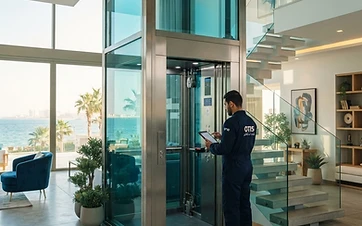
Home Elevator Maintenance Cost in Jeddah 2026
Why the home elevator maintenance cost in Jeddah splits into a predictable contract and a variable repair reserve, how contract and pay-per-visit pricing compare, and the parts, callouts, and modernization costs to budget for across a lift life.

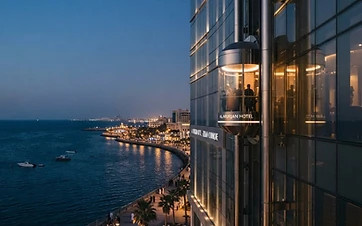
Panoramic Elevators for Jeddah Corniche Hotels
How panoramic elevators turn a hotel ride into a Red Sea viewing experience, the laminated glass and structural allowance that EN 81-20 demands on a coastal tower, and why exposed lifts need tighter cleaning and corrosion care than inland units.

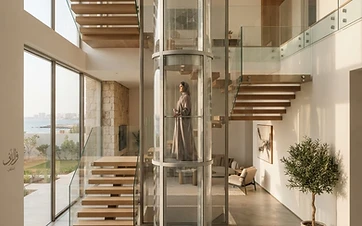
PVE Elevator Installation for Jeddah Homes
How a PVE lift moves on air pressure with no pit, shaft, or machine room, why that suits tight two to four storey Jeddah homes, what the footprint, single-phase power, and floor cut-outs demand, and how ASME A17.1 keeps the unit safe.


How to Choose an Elevator: A Practical Selection Guide
Picking the right elevator comes down to five decisions: the drive type, the capacity, the cabin and finishes, the safety and accessibility features, and the long-term service plan. Get those right in order and the rest of the specification falls into place.