Elevator Supplier in Jeddah: How to Pick the Right Partner
A practical guide for developers, contractors and facilities managers on choosing a dependable elevator supplier in Jeddah, covering local experience, Saudi Building Code compliance, supply and warranty scope, European-spec vs standard ranges, and the red flags that should make you pause.

This guide is written for people who are past the research stage and comparing providers for a real Jeddah project: a developer finishing a tower near the Corniche, a facilities manager running a hotel, or a contractor fitting out a mixed-use block. It covers what a dependable supplier should offer, the questions to ask before you buy, how European-spec and standard ranges differ, and the red flags that should make you pause. Demand is not slowing. The Saudi Arabia elevators market generated revenue of USD 1,380.7 million in 2025 and is projected to reach USD 2,133.7 million by 2033, a compound annual growth rate of 5.8%, according to Grand View Research. More buildings and more suppliers mean more choice, and more ways to choose badly. FUJI TRIENNIUM LIFT works with building professionals across Jeddah to make that choice easier.
Key takeaways
Before diving into the detail, here are the five points that matter most when picking an elevator supplier in Jeddah:
- A reliable Jeddah elevator supplier proves local installation experience, Saudi Building Code compliance, and in-city spare-part stock before you sign anything.
- Ask for the full supply, installation and warranty scope in writing, including who owns commissioning, call-out times, and what the warranty excludes.
- European-spec ranges built to EN 81 cost more up front but suit high-traffic towers; standard ranges can fit low-rise buildings without overspending.
- Treat vague lead times, missing spare-part sourcing, and quotes that omit installation or testing as red flags worth walking away from.
- FUJI TRIENNIUM LIFT supplies, installs and services elevators for Jeddah building professionals with local support and code-compliant products.
What to expect from a reliable Jeddah elevator supplier
A reliable elevator supplier in Jeddah does more than sell you a car and a motor. The right partner handles supply, installation, commissioning, testing and long-term service, and takes responsibility across all of it rather than pointing to a third party when something goes wrong. Jeddah's building pipeline is substantial, which raises the stakes on choosing well. Saudi Arabia's construction market was valued at USD 70.33 billion in 2024 and is projected to reach USD 91.36 billion by 2029, according to the U.S. International Trade Administration. For a buyer, that growth means capable suppliers are busy, so the ones worth hiring will expect you to ask serious questions. Look for these signals before you shortlist anyone:
- Local project history. Ask for Jeddah addresses, not a generic brochure. A supplier who has installed in the city understands its permitting, its power conditions, and the heat and humidity that affect equipment near the coast.
- Code compliance as standard. The Saudi Building Code governs lift shafts, fire separation, accessibility and mechanical systems. A supplier should name the code and show how their products and installation meet it, without you having to push.
- In-Kingdom service presence. A phone number in Jeddah, engineers based in the region, and parts held locally matter far more than a prestigious head office abroad.
- A clear single point of accountability. When supply, installation and maintenance sit with one accountable partner, you avoid the finger-pointing that stalls repairs.
Supply, installation and warranty questions to ask before buying
The questions you ask before signing separate a smooth project from a stalled one. Get the answers in writing, because a verbal promise does not help you when a car sits idle on the twelfth floor. Warranty terms are only as good as the service behind them; a maintenance plan built for Jeddah buildings shows the routine tasks a competent service partner should cover, whatever brand you install. Ask every shortlisted supplier the following:
- What exactly is in the supply scope? Confirm whether the quote includes the car, controller, doors, guide rails, fixings and all shaft components, or only the headline equipment.
- Who owns installation and commissioning? Clarify whether the supplier installs with their own crews or subcontracts, and who signs off the final safety test.
- What does the warranty cover, and for how long? Get the term, what is included, and what is excluded. Wear parts, misuse and third-party interference are common exclusions worth reading closely.
- What are the guaranteed response times? For a working elevator, a call-out window measured in hours matters more than one measured in days. Ask for the commitment in the contract.
- How is maintenance handled after the warranty ends? A supplier who offers a clear service agreement is planning for your building whole life, not just the sale.
Comparing European-spec vs standard product ranges
The choice between European-spec and standard ranges comes down to traffic, building height and how much downtime you can tolerate. European-spec elevators are built to the EN 81 safety standard, the European norm for lift construction and installation, and typically bring tighter tolerances, more refined ride quality and broader safety features. Standard ranges cost less and can be the sensible choice for simpler buildings. Traction systems dominate Saudi installations, holding a 56.91% market share, with revenue of USD 757.87 million, according to Grand View Research. That reflects how most Jeddah buildings, from mid-rise offices to tall towers, lean toward traction over hydraulic drives. Match the range to the building:
- High-traffic towers, hotels and hospitals. European-spec ranges suit buildings where an elevator runs hard all day and any stoppage disrupts guests, patients or tenants. The higher build quality earns its cost through reliability.
- Low-rise residential and small commercial. A standard range with a reputable supplier behind it often serves these buildings well without overspending on capacity you will never use.
- Machine room availability. Machine-room-less traction designs save space and are the fastest-growing segment in the Saudi market, which matters when floor plans are tight.
Red flags in quotes, lead times and spare-part availability
Certain warning signs in a quote predict trouble long before installation day. A quote that reads clean on price but vague on everything else is often the most expensive option once hidden costs and delays surface. Spare-part availability deserves special weight in Jeddah. An elevator out of service is a floor of your building out of use, and imported parts can turn a one-day repair into a multi-week wait. Suppliers who hold common components inside Saudi Arabia restore service faster, which is why local stock should be a scored criterion in your decision, not an afterthought. Watch for these red flags:
- Scope gaps in the quote. If installation, commissioning, testing or shaft components are missing, the headline price is not the real price. Expect the gaps to reappear as change orders.
- Open-ended lead times. A credible supplier commits to a delivery and installation date range and explains what drives it. "As soon as possible" is not a plan.
- No answer on spare parts. Ask where common parts are stocked. If the answer is an overseas warehouse with no local buffer, a single failed component can idle your elevator for weeks.
- Pressure tactics and vanishing discounts. A price that is only valid "today" is a sales device, not a reflection of real cost.
- Reluctance to share references. A supplier proud of their Jeddah work will give you addresses and contacts. Hesitation here is telling.
How FUJI TRIENNIUM LIFT serves building professionals across Jeddah
FUJI TRIENNIUM LIFT works with developers, contractors and facilities teams across Jeddah, covering the full path from product selection through supply, installation and ongoing service. The focus is on matching the right elevator to each building rather than pushing a single range, and on keeping support local so response times stay short. For building professionals, that means a few practical things:
- Code-compliant products chosen to meet Saudi Building Code requirements for safety, fire separation and accessibility.
- Local installation and service so commissioning, testing and call-outs are handled by teams who know Jeddah buildings and conditions.
- Product range breadth, from standard ranges for low-rise buildings to European-spec options for high-traffic towers, hotels and healthcare facilities.
- Technical resources and project galleries that let you see real installations before you commit.
Frequently asked questions
Common questions from Jeddah building professionals about choosing an elevator supplier:
- What should I ask an elevator supplier in Jeddah before buying? Ask for proof of local installations, Saudi Building Code compliance, a written scope covering supply, installation, commissioning and warranty, guaranteed call-out times, and confirmation that spare parts are stocked inside Saudi Arabia.
- Do I need European-spec elevators in Jeddah? Not always. European-spec ranges built to EN 81 suit high-traffic towers, hotels and hospitals where uptime matters most. Standard ranges can serve low-rise residential and small commercial buildings at a lower cost.
- How long does elevator delivery and installation take in Jeddah? Lead times vary by product and configuration. A credible supplier commits to a date range in writing and explains what drives it. Vague or open-ended timelines are a warning sign worth questioning before you pay a deposit.
- Why does local spare-part availability matter? An elevator that waits weeks for an imported part means lost use of your building. Suppliers that stock common parts inside Saudi Arabia restore service faster and keep tenants, guests or patients moving.
Conclusion
Your next step is concrete: draw up a one-page scope for your building, listing floor count, expected traffic, budget range and required completion date, then send the same document to every supplier you are considering. Identical briefs produce comparable quotes, and comparable quotes make the right partner obvious. FUJI TRIENNIUM LIFT welcomes that brief from Jeddah developers, contractors and facilities teams, and responds with a code-compliant proposal, local service, and a product range matched to the building rather than the sales target.

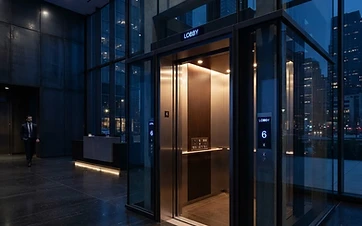
دليل وأهمية مصاعد فوجي تريينيوم FUJI TRIENNIUM LIFT
تعرّف على خبرة فوجي تريينيوم الممتدة منذ 2010، التزامها بكود EN81 وشهادة سابر، ونظام "الفل باكج" الكامل، وخدمات الصيانة على مدار الساعة في المملكة.

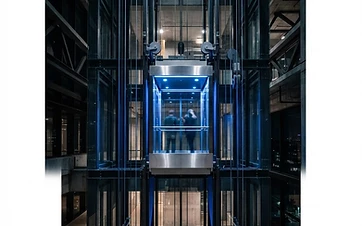
Elevator Safety Standards in Saudi Arabia: EN 81-20/50, SABER & SASO Compliance
How EN 81-20/50 design rules, the SABER conformity program, and SASO standards work together to keep elevators safe, certified, and legal to operate in Saudi Arabia.


Elevator Selection Guide: Matching Lift Type to Building Height and Usage
How to match hydraulic, MRL traction, and geared/gearless systems to building height, size capacity around peak five-minute demand, specify ADA accessibility early, and weigh lifetime service cost, not just purchase price.

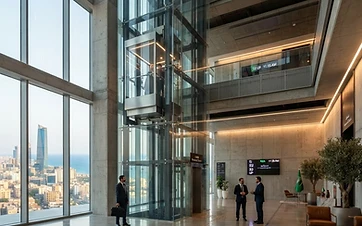
Commercial Elevators in Jeddah: Types, Drive Systems, and Local Factors
How to match the four commercial elevator types to building use, choose between traction and hydraulic drives for Jeddah high-rises and low-rises, and account for the coastal climate and 220V/60Hz power supply in every specification.


Home Elevator Maintenance: A Jeddah Homeowner's Guide
Why Jeddah humidity shortens home elevator service intervals, the simple checks owners can do between visits, the warning signs that demand urgent attention, and how to choose a maintenance provider for your villa.

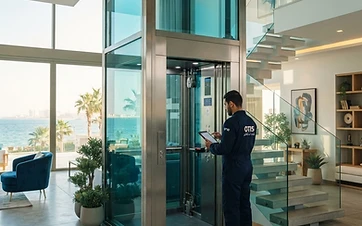
Home Elevator Maintenance Cost in Jeddah 2026
Why the home elevator maintenance cost in Jeddah splits into a predictable contract and a variable repair reserve, how contract and pay-per-visit pricing compare, and the parts, callouts, and modernization costs to budget for across a lift life.

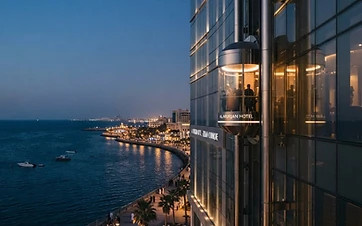
Panoramic Elevators for Jeddah Corniche Hotels
How panoramic elevators turn a hotel ride into a Red Sea viewing experience, the laminated glass and structural allowance that EN 81-20 demands on a coastal tower, and why exposed lifts need tighter cleaning and corrosion care than inland units.

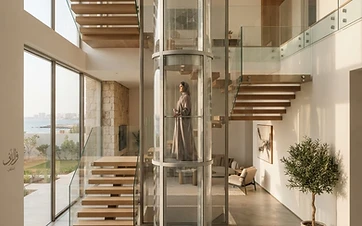
PVE Elevator Installation for Jeddah Homes
How a PVE lift moves on air pressure with no pit, shaft, or machine room, why that suits tight two to four storey Jeddah homes, what the footprint, single-phase power, and floor cut-outs demand, and how ASME A17.1 keeps the unit safe.

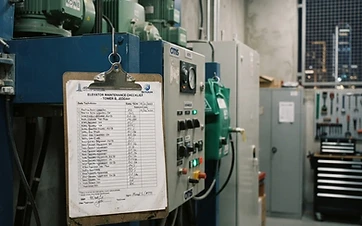
Free Elevator Maintenance Checklist PDF for Jeddah Managers
How a checklist PDF groups tasks by frequency, the four line-item blocks every Jeddah tower needs, why each row carries a named owner and a signature, and why a printed sheet beats an app in a machine room with weak signal.


How to Choose an Elevator: A Practical Selection Guide
Picking the right elevator comes down to five decisions: the drive type, the capacity, the cabin and finishes, the safety and accessibility features, and the long-term service plan. Get those right in order and the rest of the specification falls into place.