How to Choose an Elevator: A Practical Selection Guide
A practical five-step framework for specifying the right elevator, from drive type and capacity to cabin, accessibility, safety, and long-term service, written for building and construction professionals in Saudi Arabia.
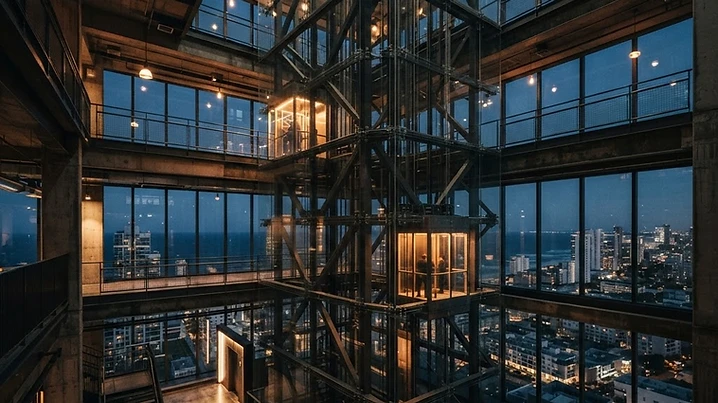
Picking the right elevator comes down to five decisions: the drive type, the capacity, the cabin and finishes, the safety and accessibility features, and the long-term service plan. Get those right in order and the rest of the specification falls into place. This elevator selection guide walks through each step so you can brief a supplier with confidence instead of guessing. Elevators are a long-lived investment. The global elevator market reached USD 110.0 billion in 2025 and is projected to grow to USD 160.9 billion by 2035 (Global Market Insights, 2025). A lift you install today will likely run for decades, so the choices below shape daily building life for a long time. FUJI TRIENNIUM LIFT works with building and construction professionals in Saudi Arabia to translate these decisions into a workable specification.
Key takeaways
Before diving into the detail, here are the five decisions that matter most and the order to make them in:
- Start with building height and traffic. Hydraulic lifts suit low-rise buildings, machine-room-less traction fits mid-rise, and geared or gearless traction serves high-rise towers.
- Size capacity around peak five-minute demand, not just the number of floors, so passengers are not left waiting during morning arrivals.
- Specify accessibility early. ADA Section 407 sets rules for call-button reach, door-open timing, and two-way emergency communication inside the car.
- Maintenance and repair account for roughly 47% of global elevator industry revenue in 2025, so weigh lifetime service cost, not just the purchase price.
- Brief your supplier with a written checklist covering height, traffic, capacity, finishes, codes, budget, and lead time to get accurate, comparable quotes.
How do you match elevator type to building height?
Building height is the first filter when you choose an elevator. Hydraulic lifts suit low-rise buildings of roughly two to five floors. Machine-room-less (MRL) traction elevators cover most mid-rise work. Geared and gearless traction systems serve taller towers where higher speed and longer travel are needed. The market reflects this split. MRL traction held about 35.0% of elevator market revenue in 2025, while hydraulic systems held about 15.0% (Global Market Insights, 2025). MRL designs remove the separate machine room, which frees floor space and simplifies the building layout. Usage matters as much as height. A residential block, a hospital, and a warehouse with the same number of floors need different lifts. Think about whether the car carries people, beds and stretchers, or heavy goods, and whether it runs occasionally or all day. FUJI TRIENNIUM LIFT groups its product range and technical resources around these usage patterns so you can start from the right family of lifts.
- Hydraulic elevators fit low-rise buildings of roughly two to five floors and keep the upfront cost down.
- Machine-room-less traction covers most mid-rise work and frees floor space by removing the separate machine room.
- Geared and gearless traction serve taller towers where higher speed and longer travel are needed.
- Match the usage pattern: a hospital bed car, a passenger car, and a goods lift need different configurations even at the same height.
How do you calculate required capacity and traffic?
Capacity is not just the number of floors. Size the system around peak five-minute demand, meaning the busiest five-minute window of the day, usually the morning arrival. If the lifts cannot clear that rush, people queue in the lobby no matter how many floors you serve. Work through three numbers. First, the building population, which is how many people use the floors above the entrance. Second, the peak arrival rate, often estimated at a share of that population arriving in five minutes. Third, the handling capacity of the proposed cars and their round-trip time. Together these tell you how many cars you need and how large each should be. A rated car capacity is expressed in persons and kilograms. A common passenger car might carry 8 to 13 people. Oversizing wastes money and shaft space, while undersizing creates waits and crowding. For complex buildings, a full traffic study is worth the effort before you commit to a shaft count.
- Estimate the building population, the people who use the floors above the entrance.
- Determine the peak five-minute arrival rate, usually the morning up-peak.
- Calculate the handling capacity of the proposed cars and their round-trip time.
- Avoid oversizing, which wastes shaft space, and undersizing, which creates crowding during peaks.
What cabin, door, and finish decisions matter?
Cabin and door choices affect both daily use and cost. Decide the car interior finishes, the lighting, the ceiling style, the handrails, and the floor material early, because these drive the quote and the lead time. Door type and width then follow from the traffic and accessibility needs. Doors deserve real attention. Center-opening doors move passengers faster than side-opening doors, which helps in busy buildings. Door width must also suit the users: wheelchairs, trolleys, and furniture all need generous clear openings. In healthcare and service lifts, deeper cars and wider doors are often essential. Finishes are where appearance meets durability. A hotel lobby lift and a back-of-house service car have very different needs. Stainless steel resists wear in high-traffic cars, while glass or decorative panels suit showcase lifts. Match the finish to the traffic it will actually see, not only to the look you want on opening day.
- Specify car interior finishes, lighting, ceiling, handrails, and flooring early because they drive both the quote and the lead time.
- Choose center-opening doors for busy buildings where passenger flow matters most.
- Set door width to suit wheelchairs, trolleys, and furniture, especially in healthcare and service lifts.
- Match finishes to the traffic they will see: stainless steel for high-traffic cars, glass or decorative panels for showcase lifts.
Which accessibility and safety features should you specify?
Accessibility and safety are not optional extras; they are set by code and by the needs of every user. In the United States, ADA Section 407 governs elevator accessibility, covering call-button reach and size, how long doors stay fully open, audible and visual signals, and a two-way emergency communication system inside the car (ADA.gov, 2010 Standards). Safety standards define the engineering behind the lift. Internationally, the ISO 8100 series is becoming the harmonized reference for elevator safety, taking over from the long-used EN 81 family, while ASME A17.1 governs elevators across North America. Confirm which code applies in your jurisdiction and write it into the specification, so every bidder quotes to the same baseline. Beyond the baseline, consider emergency operation, fire-service modes, battery-backed rescue to the nearest floor, and clear signage. Specify these up front. Adding them late usually costs more and can delay handover.
- ADA Section 407 sets call-button reach and size, door-open timing, audible and visual signals, and two-way emergency communication inside the car.
- The ISO 8100 series is becoming the international harmonized reference for elevator safety, succeeding the EN 81 family.
- ASME A17.1 governs elevators across North America; confirm which code applies in your jurisdiction.
- Specify emergency operation, fire-service modes, battery-backed rescue, and signage up front to avoid late change orders.
How do budget, lead time, and maintenance shape the choice?
The purchase price is only part of the cost. Maintenance and repair accounted for about 47.0% of global elevator industry revenue in 2025, which shows how large ongoing service becomes over a lift working life (Global Market Insights, 2025). A cheaper lift that is costly to service rarely wins over its full lifetime. Lead time affects your construction program. Custom cars, special finishes, and non-standard travel all extend delivery. Standardized MRL products usually ship faster than bespoke high-rise systems. Ask each supplier for a realistic manufacturing and installation schedule, then line it up against your project timeline before you commit. Plan maintenance from day one. Ask about spare-part availability, response times, remote monitoring, and whether parts are proprietary or widely stocked. A clear service agreement, including who handles call-outs and how fast, protects building uptime for years. FUJI TRIENNIUM LIFT pairs its products with service support so the maintenance plan is settled alongside the equipment choice rather than after it.
- Maintenance and repair make up about 47% of global elevator industry revenue, so weigh lifetime service cost over purchase price.
- Custom cars and special finishes extend delivery; standardized MRL products ship faster.
- Ask each supplier for a realistic manufacturing and installation schedule and line it up against your project timeline.
- Settle the maintenance plan alongside the equipment choice: spare parts, response times, remote monitoring, and call-out ownership.
What should your supplier brief include?
A good brief turns vague requirements into comparable quotes. Give every supplier the same written information so their proposals line up and you can judge them fairly. Use the checklist below as the starting point and expand it for complex buildings. Share this brief as a single document and ask suppliers to respond point by point. If a bidder skips items or answers vaguely, that tells you something about how they will handle the project later.
- Building height, number of floors, and total travel distance.
- Intended use: passengers, goods, beds, or a mix.
- Estimated building population and expected peak traffic.
- Required car capacity in persons and kilograms, and the number of cars.
- Door type, clear opening width, and speed target.
- Cabin finishes, lighting, handrails, and flooring preferences.
- Applicable safety and accessibility codes for your jurisdiction.
- Fire-service, emergency, and backup-rescue requirements.
- Budget range and your construction program dates.
- Maintenance expectations, including response times and part availability.
Frequently asked questions
Common questions from building professionals about choosing the right elevator:
- How do I choose the right elevator type for my building? Match the drive type to building height. Hydraulic elevators fit two to five floors, machine-room-less traction suits mid-rise buildings up to roughly twelve floors, and geared or gearless traction serves taller towers where speed matters.
- How much elevator capacity does my building need? Base capacity on peak five-minute passenger demand, not floor count alone. Estimate how many people arrive or leave during the busiest window, then size car capacity and the number of cars so average wait time stays acceptable.
- What accessibility features must an elevator include? In the United States, ADA Section 407 governs elevator accessibility. It covers call-button height and size, how long doors stay open, audible and visual signals, and a two-way emergency communication system inside the car.
- Is it cheaper to maintain an old elevator or modernize it? It depends on condition and parts availability. Maintenance and repair make up about 47% of global elevator industry revenue in 2025, which shows how large running costs become over a lift life. Modernization often pays off once breakdowns rise.
Conclusion
Your next step is practical: fill in the checklist above for your own building, then send it to two or three suppliers for comparable quotes. If you want help turning site conditions into a firm specification, FUJI TRIENNIUM LIFT offers technical resources and project support built for exactly that stage.

دليل وأهمية مصاعد فوجي تريينيوم FUJI TRIENNIUM LIFT
تعرّف على خبرة فوجي تريينيوم الممتدة منذ 2010، التزامها بكود EN81 وشهادة سابر، ونظام "الفل باكج" الكامل، وخدمات الصيانة على مدار الساعة في المملكة.

Elevator Safety Standards in Saudi Arabia: EN 81-20/50, SABER & SASO Compliance
How EN 81-20/50 design rules, the SABER conformity program, and SASO standards work together to keep elevators safe, certified, and legal to operate in Saudi Arabia.


Elevator Selection Guide: Matching Lift Type to Building Height and Usage
How to match hydraulic, MRL traction, and geared/gearless systems to building height, size capacity around peak five-minute demand, specify ADA accessibility early, and weigh lifetime service cost, not just purchase price.

Commercial Elevators in Jeddah: Types, Drive Systems, and Local Factors
How to match the four commercial elevator types to building use, choose between traction and hydraulic drives for Jeddah high-rises and low-rises, and account for the coastal climate and 220V/60Hz power supply in every specification.


Home Elevator Maintenance: A Jeddah Homeowner's Guide
Why Jeddah humidity shortens home elevator service intervals, the simple checks owners can do between visits, the warning signs that demand urgent attention, and how to choose a maintenance provider for your villa.


Elevator Supplier in Jeddah: How to Pick the Right Partner
Pick an elevator supplier in Jeddah by checking three things first: proven local installations, Saudi Building Code compliance, and spare parts stocked inside the Kingdom. Price matters, but a cheaper quote that leaves you waiting weeks for an imported part or an engineer costs far more once your building is live.

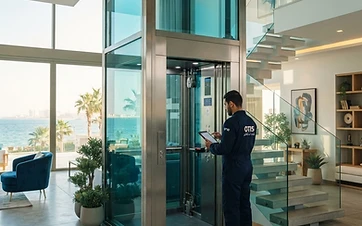
Home Elevator Maintenance Cost in Jeddah 2026
Why the home elevator maintenance cost in Jeddah splits into a predictable contract and a variable repair reserve, how contract and pay-per-visit pricing compare, and the parts, callouts, and modernization costs to budget for across a lift life.

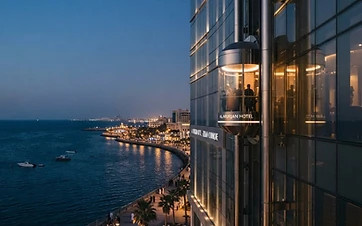
Panoramic Elevators for Jeddah Corniche Hotels
How panoramic elevators turn a hotel ride into a Red Sea viewing experience, the laminated glass and structural allowance that EN 81-20 demands on a coastal tower, and why exposed lifts need tighter cleaning and corrosion care than inland units.

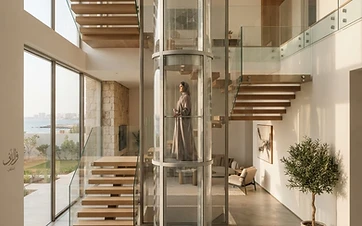
PVE Elevator Installation for Jeddah Homes
How a PVE lift moves on air pressure with no pit, shaft, or machine room, why that suits tight two to four storey Jeddah homes, what the footprint, single-phase power, and floor cut-outs demand, and how ASME A17.1 keeps the unit safe.

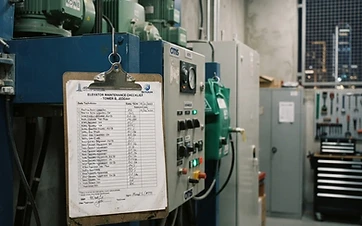
Free Elevator Maintenance Checklist PDF for Jeddah Managers
How a checklist PDF groups tasks by frequency, the four line-item blocks every Jeddah tower needs, why each row carries a named owner and a signature, and why a printed sheet beats an app in a machine room with weak signal.